


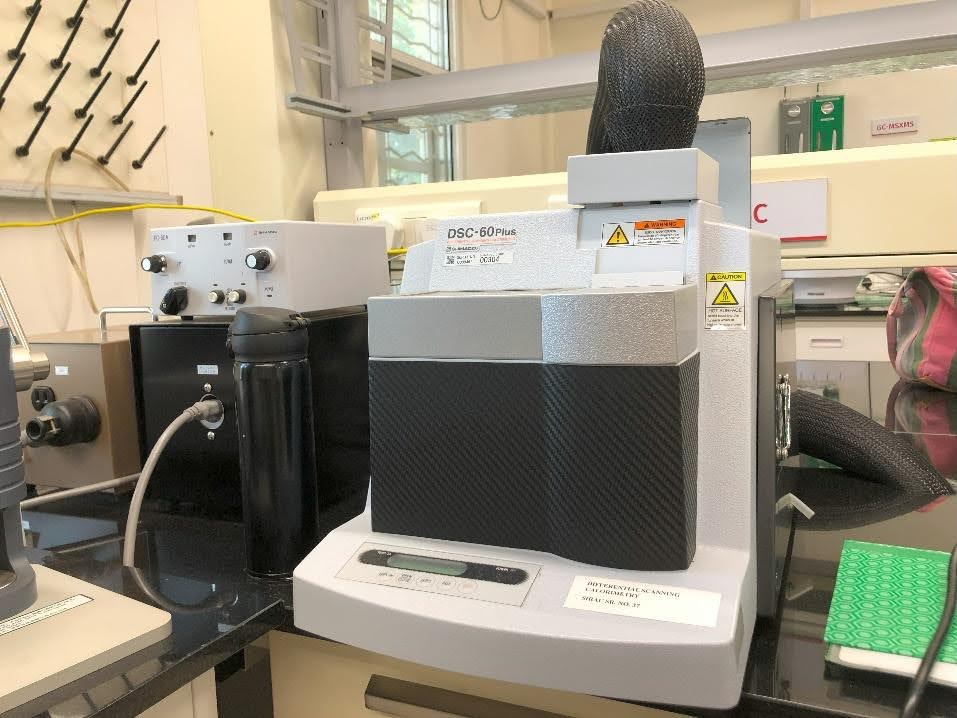
Differential scanning calorimetry (DSC) is a thermal analysis technique that measures the temperature difference between a sample and a reference material as they are subjected to a controlled temperature program. This technique allows for the study of various thermal transitions and properties of materials, including melting, crystallization, glass transitions, and specific heat capacity.
This specialized training program on Differential Scanning Calorimetry (DSC) is designed for researchers, engineers, students, and professionals involved in material science, polymer research, pharmaceuticals, food science, and related fields.
Key Learning Outcomes
- Introduction to Thermal Analysis
- Understand the principles and working of Differential Scanning Calorimetry (DSC)
- Operate DSC instruments confidently and safely
- Prepare samples correctly for accurate thermal analysis
- Develop and optimize DSC test methods for various materials
- Analyse and interpret DSC thermograms effectively
- Identify thermal transitions such as melting, crystallization, and glass transition
Training Features
- Fundamental concepts of DSC and thermal analysis
- Hands-on training with DSC instruments
- Thermogram analysis and data interpretation
- Troubleshooting techniques
- Expert guidance and interactive sessions
- Certificate of completion
Why Choose This Program?
- Learn from experts with real-world experience in academia, industry, and research.
- Practice with actual instruments, sample analysis, and data interpretation.
- Earn a recognized certificate to boost your academic or professional profile.
Eligibility Criteria
PhD, Graduates & Postgraduates in relevant fields:
Chemistry, Life Sciences, Analytical Chemistry, Chemical Engineering, Food Technology, Biotechnology, Biochemistry, Biochemical Engineering, Environmental Science, Environmental Engineering, Pharmaceuticals Chemistry, Polymer chemistry.