


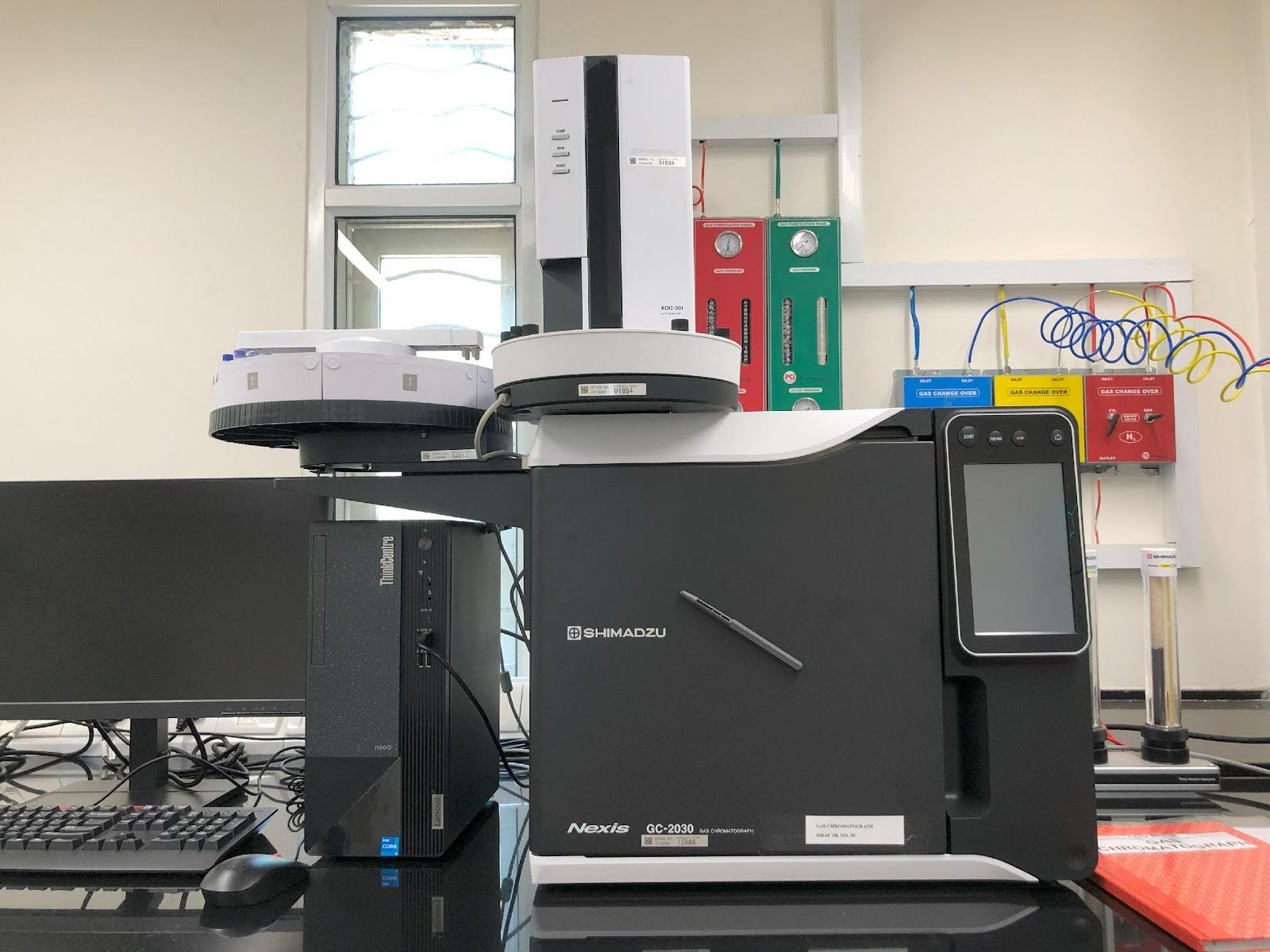
Gas Chromatography
Gas Chromatography (GC) is a widely used analytical technique for separating, identifying, and quantifying volatile compounds in a mixture. In Gas Chromatography, a sample is vaporized and carried by an inert gas (such as helium or nitrogen) through a column containing a stationary phase. As the sample components travel through the column, they interact with the stationary phase based on their chemical properties, allowing them to separate over time. Each compound exits the column at a different time—known as the retention time—and is detected by a detector such as a Flame Ionization Detector (FID) or Thermal Conductivity Detector (TCD).
Key Learning Outcomes
- Principles and components of Gas Chromatography
- Sample preparation techniques and injection methods
- Column selection and temperature programming
- Detector types (FID, TCD, etc.) and their applications
- Troubleshooting common issues and maintenance
- Data analysis and reporting
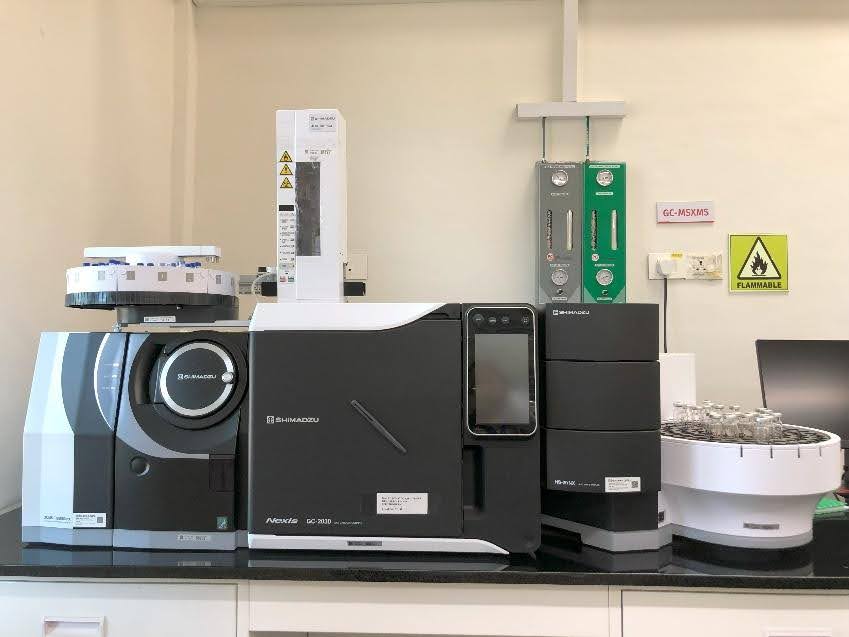
Gas Chromatography- Mass Spectrometry
GC-MS/MS (Gas Chromatography - Mass Spectrometry) is a powerful analytical technique in which volatile compounds are first vaporized and transported through a chromatographic column by an inert gas. As they pass through the column, the compounds separate according to their chemical characteristics. These separated components are then introduced into a mass spectrometer, where they are identified and analysed based on their mass-to-charge ratios. Known for its high sensitivity and specificity, GC-MS/MS is extensively used in environmental testing, food quality control, and forensic investigations, especially for analysing complex mixtures with high precision.
Key Learning Outcomes
- Fundamentals of Gas Chromatography and Mass Spectrometry
- System components and their functions
- Sample injection techniques and column selection
- Ionization methods and mass analysers
- Tandem MS (MS/MS) techniques and applications
- Data acquisition, processing, and interpretation
- Maintenance, calibration, and troubleshooting
Training Features
- Hands-on training with modern GC & GC-MS/MS instrumentation
- Training guided by experienced faculty and technical experts
- Real-world case studies and sample analysis
- Certificate of Completion for all participants
Why Choose This Program?
- Develop practical GC & GC-MS/MS skills essential for laboratory and industry roles
- Improve employability and technical competence
- Gain confidence in handling high-sensitivity analytical tools
Eligibility Criteria
PhD, Graduates & Postgraduates in relevant fields:
Chemistry, Life Sciences, Analytical Chemistry, Chemical Engineering, Food Technology, Biotechnology, Biochemistry, Biochemical Engineering, Environmental Science, Environmental Engineering, Pharmaceuticals Chemistry, Polymer chemistry.