


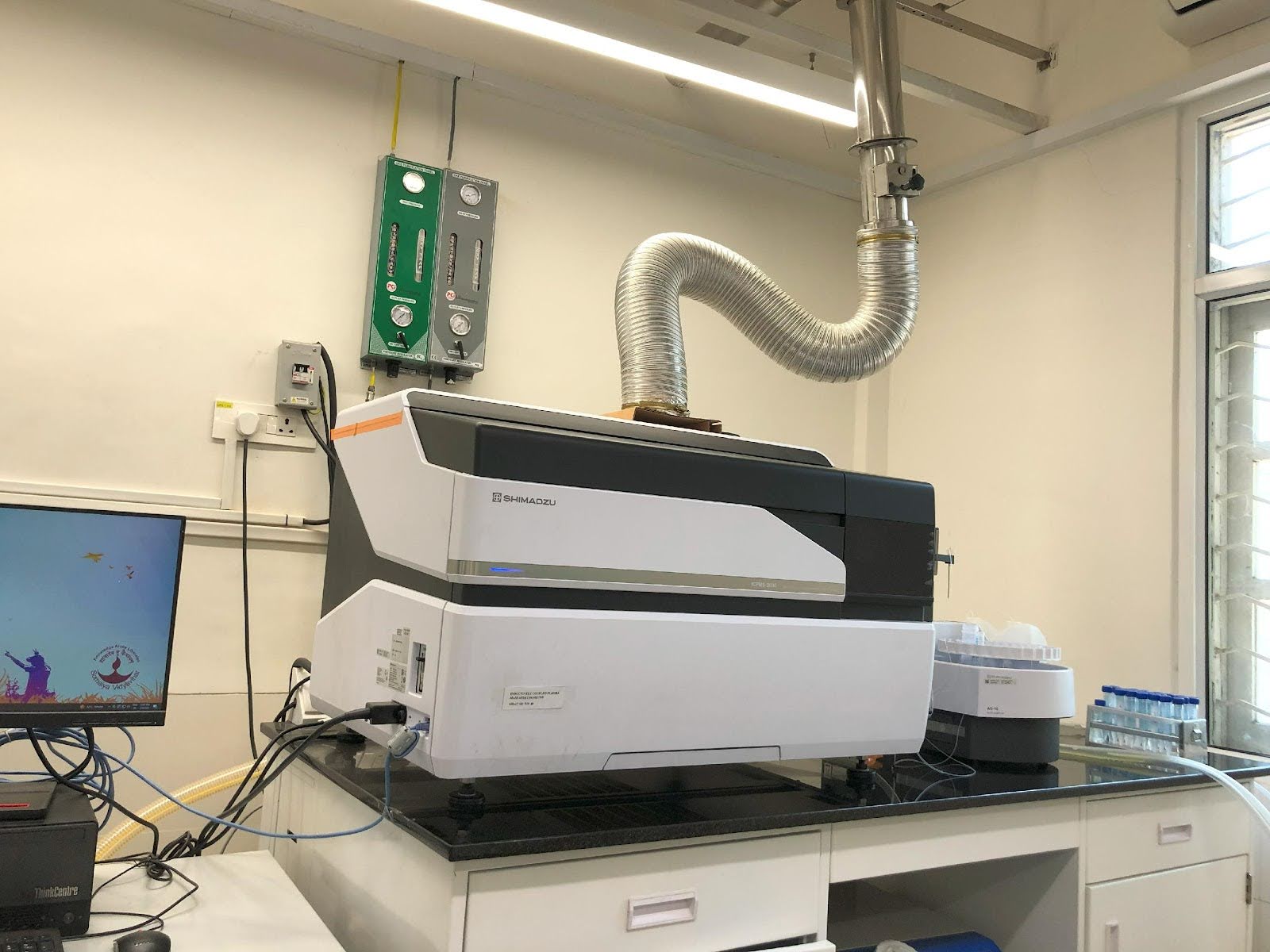
ICP-MS Training Programme
Inductively Coupled Plasma Mass Spectrometry (ICP-MS) is a highly sensitive analytical technique used for detecting metals and several non-metals at very low concentrations, often in the parts-per-trillion range. It can also detect the isotopes of the same elements. Its speed and precision make it an essential tool in modern analytical laboratories.
This training equips participants with a deep understanding of the technique’s principles, instrumentation, sample preparation, method development, and data interpretation. Whether you're working in environmental monitoring, pharmaceuticals, food safety, materials science, or academic research, mastering ICP-MS can significantly elevate your analytical capabilities.
Key Learning Outcomes
- Fundamentals of ICP-MS: Principles, components, and operation
- Sample preparation techniques and contamination control
- Calibration, standards, and quantification methods
- Troubleshooting and maintenance procedures
- Data acquisition, analysis, and reporting
- Application-specific insights (e.g., heavy metal detection, isotopic analysis)
Training Features
- Hands-on laboratory training with advanced ICP-MS instrumentation
- Led by experienced analysts and domain experts
- Real sample analysis and case-based learning
- Certification upon successful completion
Why Join This Program?
- Build technical proficiency in a high-demand analytical technique
- Improve your qualifications for research and industrial roles
- Learn current best practices in trace element analysis
- Stay ahead in a rapidly advancing field of analytical chemistry
Unlock new opportunities in scientific research and industry.
Join our ICP-MS Training Program and gain the skills needed to operate confidently and accurately in high-precision analytical environments.
Eligibility Criteria
PhD, Graduates & Postgraduates in relevant fields:
Chemistry, Analytical Chemistry, Chemical Engineering, Food Technology, Biotechnology, Biochemistry, Biochemical Engineering, Environmental Science, Environmental Engineering, Pharmaceuticals Chemistry.